Hello Students,
Here is the information for the Thomas Wolfe essay contest. Look under "Writing Competition Guidelines and Instructions" for specific requirements (500-1,000 words, etc.) and under "Polyphemus Ideas for Student Consideration" for suggested ideas. It's a broad list of suggestions and should give you some good places to start. The deadline is Saturday, September 23rd at 5pm.
Remember, this is not a requirement, but it's a great experience because it will...
*Grow you as a writer
*Expose your writing to a broader audience
*Possibly earn you a little extra cash and bragging rights
*Be useful on a college application and/or possibly useful as the base for a future college essay
Also, remember to talk with your parents if you are interested in committing to the "honors" level of work. I'm not entirely sure of the details, but I'm thinking it would consist of a few extra essays sprinkled throughout the year (like this one) and perhaps an extra novel at some point.
If you choose to participate in the contest, please let me know. I would be happy to edit/look over your essay before you submit it.
Wednesday, September 6, 2017

Thursday, August 31, 2017
Week 2 Work--Due Wed., September 6th
Week 2 Vocabulary
slipshod
slipshod
nefarious
precursor
impregnable
demure
precursor
impregnable
demure
Note: If you have not already, please read through my previous post which has some comments on grading and examples from the summer assignments.
Overview
This week we will explore some of our region's Native American heritage as expressed through oral storytelling traditions and petroglyphs. First, I want you to gain a sense of the expansive nature of Native American culture before Europeans arrived. Then we will focus on stories from the Cherokee specifically as they inhabited our region.
A. Who is Aaron Carapella and what has he accomplished?
B. According to the article, approximately how many Native American tribes were in North America before Europeans arrived?
C. Who is Doug Herman and what does he believe is important about Carapella's map?
Map Questions:
Watch the following videos by Robert Lewis, a storyteller from the Oklahoma branch of the Cheokee:
Family Tradition (4 minutes)
Robert Lewis, Storyteller (8 minutes)
The First Fire (8 minutes)
The First Cherokee Pot (7 minutes)
Write a paragraph (5-7 sentences) about Robert Lewis. Why stories are important to him, how did he became a storyteller?
Unit 4
Define petroglyph. What does petra mean? gluphē?
The carpetbagger, Judaculla Rock (5 minutes)
Read "Vandalism at Judaculla"
Describe some of the damage that the rock has suffered and how the county is making better efforts to protect it.
Thought for the Week:
A Cherokee elder was teaching his young grandson about life.
"A fight is going on inside me," he said to the boy. "It is a terrible fight and it is between two wolves. One is evil- he is anger, envy, sorrow, regret, greed, arrogance, self-pity, guilt, resentment, inferiority, lies, false pride, superiority, self-doubt and ego.
The other is good- he is joy, peace, love, hope, serenity, humility, kindness, benevolence, empathy, generosity, truth, compassion and faith.
This same fight is going on inside you—and inside every other person, too."
The boy thought about it for a minute and then asked his grandfather,
"Which wolf will win?"
The elder simply replied,
"The one you feed.”
― Tsalagi Tale
Directions:
I have broken the work down into suggested "units" which are approximately 45 minutes each (3 hours total). This should help you spread out the work. Though it may look like a lot, most of the questions are simple and the videos are short.
View the following resources then answer the questions on your own paper. If the answer is one or two words, you do not have to write a complete sentence, otherwise you should. Please write in such a way that I can read your answers. If you tend to write lightly, use a pen. Optional: here is a document you can print out and answer on if you prefer.
Unit 1
View and write out answers to the following:
1. Examine this timeline of Native American activity in the Americas. You should be able to click on it to zoom.
A. Views may differ on the earliest dates of civilization, but approximately how long have Native Americans inhabited the Americas?
B. According to the timeline, approximately when did the Vikings arrive?
C. How many years between when the Vikings arrived and Columbus came?
D. How long were Europeans in the Americas before the United States was founded?
E. How long has it been since the United States was founded?
2. Read this article and examine this map of Native America tribes.
Article questions:
Unit 1
View and write out answers to the following:
1. Examine this timeline of Native American activity in the Americas. You should be able to click on it to zoom.

A. Views may differ on the earliest dates of civilization, but approximately how long have Native Americans inhabited the Americas?
B. According to the timeline, approximately when did the Vikings arrive?
C. How many years between when the Vikings arrived and Columbus came?
D. How long were Europeans in the Americas before the United States was founded?
E. How long has it been since the United States was founded?
2. Read this article and examine this map of Native America tribes.
Article questions:
A. Who is Aaron Carapella and what has he accomplished?
B. According to the article, approximately how many Native American tribes were in North America before Europeans arrived?
C. Who is Doug Herman and what does he believe is important about Carapella's map?
D. What does Comanche mean in Ute and why is this significant?
Map Questions:
E. Approximately how many tribes lived in North and South Carolina?
F. What is the common name of the Ani'yunwi'ya tribe?
3. Watch the following videos and answer the questions:
Native American Storytelling (4 minutes)
A. How were Native American storytellers viewed differently than storytellers are today?
B. Describe several ways storytelling was used by Native Americans.
C. What was the purpose of legends?
D. Describe the legend of the Thunderbird.
E. Describe the story of the medicine bear.
Storytelling (2 minutes)
1. How were stories used in the ancient world?
2. Name three forms of storytelling.
Unit 2
Read and Answer
James Mooney and Cherokee Stories
1. Who is James Mooney and why is he significant to our understanding of the Cherokee?
2. Who brought fire to the Cherokee?
3. Why is the hummingbird significant to the Cherokee?
4. How do Cherokee tales explain an eclipse, a rainbow, and thunder?
5. Define A) Uktema B) Nuee'hi C) Yunwi Tsunsdi’
6. What role did the rabbit usually play in Cherokee stories?
Read this story recorded by James Mooney: The Origin of Sickness and Disease
1. Why did the bears meet as a counsel?
2. Why was the bow rejected as a solution?
3. How did the deer propose to solve the problem?
4. What did the reptiles and fish propose?
5. Who was the only kind animal to man and what happened to him.
6. Ultimately, how did plants intervene?
Unit 3
F. What is the common name of the Ani'yunwi'ya tribe?
3. Watch the following videos and answer the questions:
Native American Storytelling (4 minutes)
A. How were Native American storytellers viewed differently than storytellers are today?
B. Describe several ways storytelling was used by Native Americans.
C. What was the purpose of legends?
D. Describe the legend of the Thunderbird.
E. Describe the story of the medicine bear.
Storytelling (2 minutes)
1. How were stories used in the ancient world?
2. Name three forms of storytelling.
Unit 2
Read and Answer
James Mooney and Cherokee Stories
1. Who is James Mooney and why is he significant to our understanding of the Cherokee?
2. Who brought fire to the Cherokee?
3. Why is the hummingbird significant to the Cherokee?
4. How do Cherokee tales explain an eclipse, a rainbow, and thunder?
5. Define A) Uktema B) Nuee'hi C) Yunwi Tsunsdi’
6. What role did the rabbit usually play in Cherokee stories?
Read this story recorded by James Mooney: The Origin of Sickness and Disease
1. Why did the bears meet as a counsel?
2. Why was the bow rejected as a solution?
3. How did the deer propose to solve the problem?
4. What did the reptiles and fish propose?
5. Who was the only kind animal to man and what happened to him.
6. Ultimately, how did plants intervene?
Unit 3
Watch the following videos by Robert Lewis, a storyteller from the Oklahoma branch of the Cheokee:
Family Tradition (4 minutes)
Robert Lewis, Storyteller (8 minutes)
The First Fire (8 minutes)
The First Cherokee Pot (7 minutes)
Write a paragraph (5-7 sentences) about Robert Lewis. Why stories are important to him, how did he became a storyteller?
Unit 4
Define petroglyph. What does petra mean? gluphē?
1. Who is Judaculla and what do they think may be the significance of the rock carving?
2. What is the relationship of the interviewer with the rock?
3. How old do archaeologists think it may be?
4. What are some of the symbols? What do they mean?
The carpetbagger, Judaculla Rock (5 minutes)
1. What does Judaculla mean?
2. What are some of the associations the Cherokee have with Judaculla?
3. Where do they think he lived?
3. Where do they think he lived?
4. What is the condition of the rock now? How did the use of chalk impact it?
1. What are some sources of inspiration of Beverly Dickson's work?
2. Describe some of her art--what symbols she uses?
Read "Vandalism at Judaculla"
Describe some of the damage that the rock has suffered and how the county is making better efforts to protect it.
Google Judaculla Rock. What town is is close to? How far is it from your home?
Staple all of the work for this week together. Make sure your name and class are at the top. This is due at the beginning of our next class.
Thought for the Week:
A Cherokee elder was teaching his young grandson about life.
"A fight is going on inside me," he said to the boy. "It is a terrible fight and it is between two wolves. One is evil- he is anger, envy, sorrow, regret, greed, arrogance, self-pity, guilt, resentment, inferiority, lies, false pride, superiority, self-doubt and ego.
The other is good- he is joy, peace, love, hope, serenity, humility, kindness, benevolence, empathy, generosity, truth, compassion and faith.
This same fight is going on inside you—and inside every other person, too."
The boy thought about it for a minute and then asked his grandfather,
"Which wolf will win?"
The elder simply replied,
"The one you feed.”
― Tsalagi Tale
Student Examples from Summer Reading
Dear Students,
As promised, below are some examples of exceptional work from the summer reading assignment I returned yesterday. Many of you did excellent work in some area, and you should be proud of your areas of accomplishment. I suspect some of you were discouraged by your overall score, but I think for most of us, bumping up our performance will be mostly a matter of A) reading and following instructions thoroughly and precisely B) investing our work with more time and quality. Everyone can achieve success in this class if you focus and try.
As a side note, you should NOT be discouraged when you receive a B on an assignment. Some of you may be accustomed to receiving A's regularly on all assignments as a matter of course. However, if you look at the criteria of a B on my rubric, you will see that a B indicates "Above Average, Meets Expectations." This means that you fulfilled the criteria and did a good job. It is not an indication that your work is substandard. The "A" level of work is inherently a rarer thing, hence the term "exceptional."
For those of you who are new to rubrics--it may take time to understand how they do and do not work. As I use them typically, they do not correspond to a precise point system. In other words, each aspect of criteria is not worth a specific number of points which I am adding and subtracting in a mechanical fashion to arrive at your score. Instead, I look at the overall trend of the criteria holistically. Criteria may be of different weights and varying levels of importance. For instance, in your Summer Assignment Rubric, I certainly view the neatness of your work as valuable, but I would not weigh that as heavily as "notes are of an exceptional quality...." The rubric is less about computing a specific grade and more about my attempt to give you insight into the strengths and weaknesses of your work.
Another excellent tool is looking at other's work. It's helpful for you to regularly review exceptional level work so that you better understand what it might look like. Throughout the year, I will periodically provide you with such examples. This is also why I will regularly have you read each other's work in class. We expand our understanding and grow by reading the writing of others. If we pay attention, we will learn new ways to approach topics, new ways to think about things, and overall, gain a greater sense of what is possible.
If having read all of this and looking through the models, you still struggle to understand how I arrived at your grade, I'm always happy to talk you through it in person. I want you to understand how to do your very best, and I will do whatever I can to help you accomplish that goal.
Sincerely,
Mrs. Price

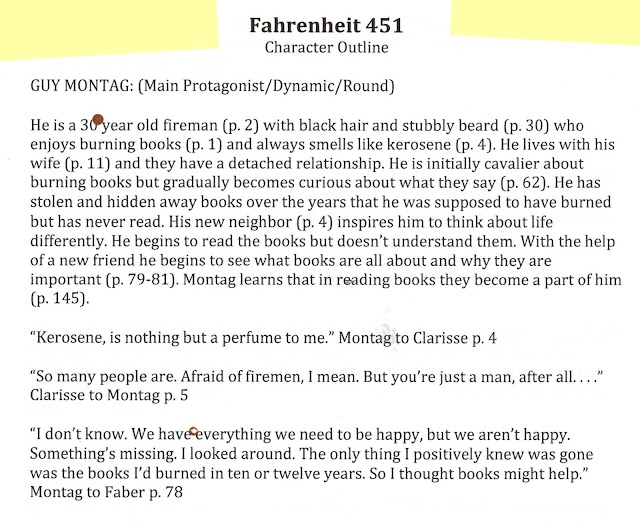

As promised, below are some examples of exceptional work from the summer reading assignment I returned yesterday. Many of you did excellent work in some area, and you should be proud of your areas of accomplishment. I suspect some of you were discouraged by your overall score, but I think for most of us, bumping up our performance will be mostly a matter of A) reading and following instructions thoroughly and precisely B) investing our work with more time and quality. Everyone can achieve success in this class if you focus and try.
As a side note, you should NOT be discouraged when you receive a B on an assignment. Some of you may be accustomed to receiving A's regularly on all assignments as a matter of course. However, if you look at the criteria of a B on my rubric, you will see that a B indicates "Above Average, Meets Expectations." This means that you fulfilled the criteria and did a good job. It is not an indication that your work is substandard. The "A" level of work is inherently a rarer thing, hence the term "exceptional."
For those of you who are new to rubrics--it may take time to understand how they do and do not work. As I use them typically, they do not correspond to a precise point system. In other words, each aspect of criteria is not worth a specific number of points which I am adding and subtracting in a mechanical fashion to arrive at your score. Instead, I look at the overall trend of the criteria holistically. Criteria may be of different weights and varying levels of importance. For instance, in your Summer Assignment Rubric, I certainly view the neatness of your work as valuable, but I would not weigh that as heavily as "notes are of an exceptional quality...." The rubric is less about computing a specific grade and more about my attempt to give you insight into the strengths and weaknesses of your work.
Another excellent tool is looking at other's work. It's helpful for you to regularly review exceptional level work so that you better understand what it might look like. Throughout the year, I will periodically provide you with such examples. This is also why I will regularly have you read each other's work in class. We expand our understanding and grow by reading the writing of others. If we pay attention, we will learn new ways to approach topics, new ways to think about things, and overall, gain a greater sense of what is possible.
If having read all of this and looking through the models, you still struggle to understand how I arrived at your grade, I'm always happy to talk you through it in person. I want you to understand how to do your very best, and I will do whatever I can to help you accomplish that goal.
Sincerely,
Mrs. Price

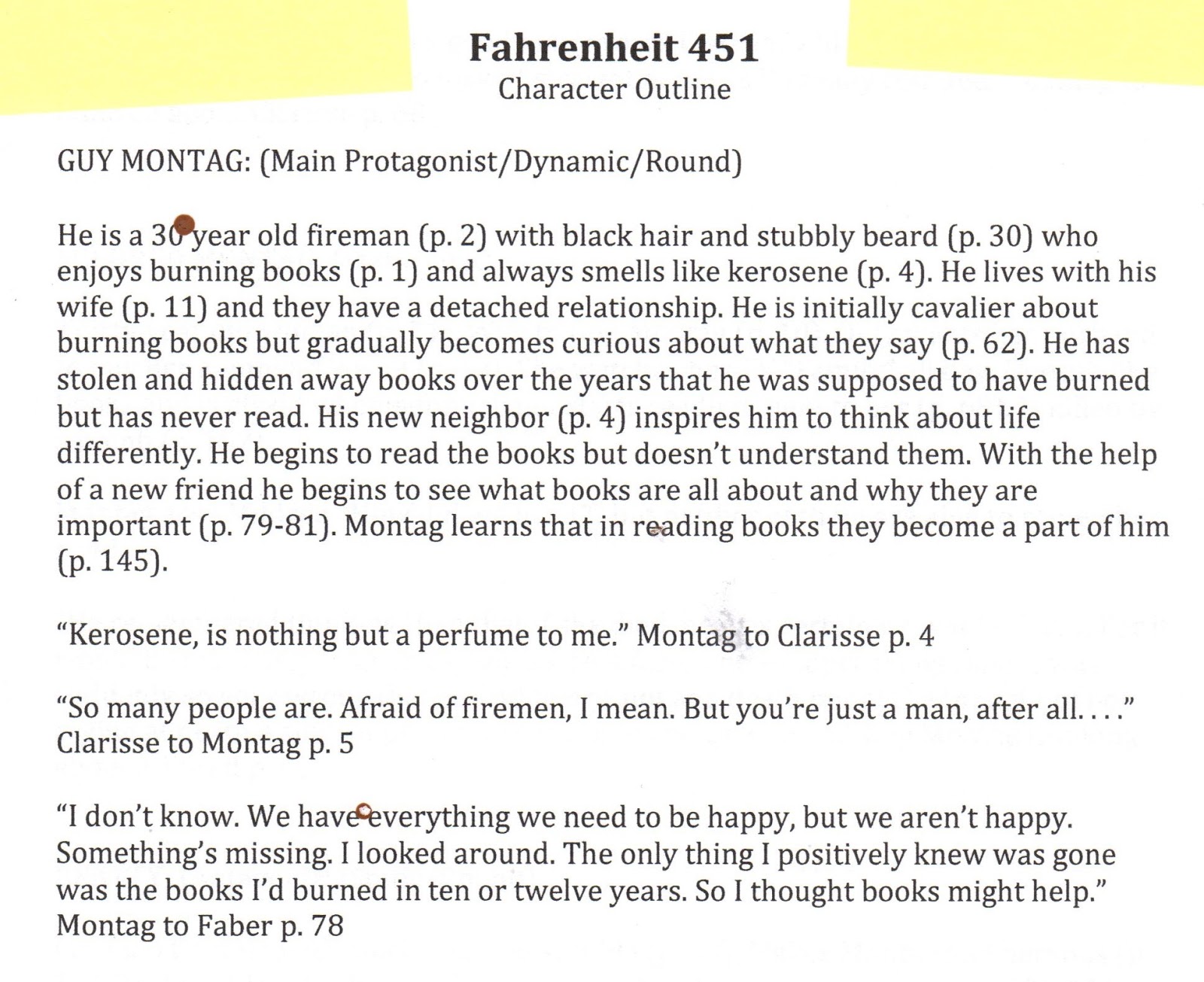

 |
| one hitch here--needed to include part of speech, but otherwise detailed, neat and organized |
Thursday, August 24, 2017
Week 1 Work--Due Wednesday, August 30th
Note to parents and students--as I mentioned in the course description, students should anticipate about 4-5 hours outside work weekly. If you work at these assignments throughout the next several days, you should be able to complete this week's work comfortably with time to spare. Spread the work out instead of letting it clump up. Time management is hugely important, especially as you prepare for upper-level coursework and for adult life in general.
1. Complete your Week 1 vocabulary work for the words below. Click here to review directions.
Week 1 Vocabulary
sycophant
pernicious
ubiquitous
non sequitur
diatribe
2. Watch this video on comma splices. This is one the grammar errors we discussed at the beginning of class. Somewhere on your M.U.G. #1 handout, write out the four ways to fix a comma splice.
3. Watch the following Ray Bradbury interviews:
A Conversation with Ray Bradbury (8 minutes)
Ray Bradbury Interview with Tobias Andersen January 2004 (Watch first 18 minutes only)
1. Complete your Week 1 vocabulary work for the words below. Click here to review directions.
Week 1 Vocabulary
sycophant
pernicious
ubiquitous
non sequitur
diatribe
2. Watch this video on comma splices. This is one the grammar errors we discussed at the beginning of class. Somewhere on your M.U.G. #1 handout, write out the four ways to fix a comma splice.
3. Watch the following Ray Bradbury interviews:
A Conversation with Ray Bradbury (8 minutes)
Ray Bradbury Interview with Tobias Andersen January 2004 (Watch first 18 minutes only)
After watching both videos, write a paragraph summarizing the videos. Remember that to summarize is to "SOME-er-ize." You won't be able to share everything from the videos, so focus on a few highlights you found particularly interesting. Keep this paragraph in your class notes.
6. Next week, we will spend about half of our class discussing Fahrenheit 451. Complete this Google Form to suggest two or three questions that will generate good class discussion.
Note--I decided not to introduce Native American literature for this week's work. We just have too much to think about and discuss with Bradbury first. Please bring your Fahrenheit 451 book to class and be ready to talk about the book. You won't need your Prentice Hall book this week either, so it can stay at home.
Questions! I'm always an email away: elizabethjprice@gmail.com
Mrs. Price
Thought for the week:
"Success on any major scale requires you to accept responsibility....In the final analysis, the one quality that all successful people have is the ability to take on responsibility." -Michael Korda, Editor-in-Chief, Simon & Schuster
4. Finish the third prompt paragraph from class:
5. In your colored journal (which stays at home) pretend you are creating a work of speculative fiction that will be set 50 years from now. Title the page In 2067 and write out 10 predictions about how you think life will be different in 2067.
6. Next week, we will spend about half of our class discussing Fahrenheit 451. Complete this Google Form to suggest two or three questions that will generate good class discussion.
Note--I decided not to introduce Native American literature for this week's work. We just have too much to think about and discuss with Bradbury first. Please bring your Fahrenheit 451 book to class and be ready to talk about the book. You won't need your Prentice Hall book this week either, so it can stay at home.
Questions! I'm always an email away: elizabethjprice@gmail.com
Mrs. Price
Thought for the week:
"Success on any major scale requires you to accept responsibility....In the final analysis, the one quality that all successful people have is the ability to take on responsibility." -Michael Korda, Editor-in-Chief, Simon & Schuster
Saturday, August 5, 2017
Pre Week 1 Resources and Videos
Hello Parents and Students,
Welcome to our class blog. Please bookmark this site as it will help you keep track of class assignments and resources throughout the year.
Here's the supply list for class.
A few notes as you work on/finish up your summer readings:
As you read Fahrenheit 451, I encourage you to annotate your text. Underline or bracket key details about character, significant quotations, questions you may have, etc.
Some students find it helpful to use an audio version while following along in the book. If this is you, here is an excellent audio version read by the author, Ray Bradbury.
Homework for first class (in addition to your summer assignments)
I would like you to watch two video segments to help you better understand different types and aspects of character. These elements should help you enrich your notes on the characters in Fahrenheit 451:
1) Watch this video (3:42) about types of characters and define the following terms in your notes: protagonist, antagonist, dynamic/round character, static/flat character. Title the top of this page of notes Characterization and keep it in the Notes section of your three-ring binder.
2) Watch this video (9:22) which introduces the concepts of direct vs. indirect characterization. Add these terms to your characterization notes: direct characterization, indirect characterization and all elements of the acronym STEAL.
As you create your character list and character notes for Fahrenheit 451 (part of your summer assignment), attempt to note some of these aspects. If you have already compiled your notes on characters, go back and label/identify whatever aspects you can.
Bring all of this work--plus the rest of the summer assignments--to our first day of class. You may wish to re-read the Summer Assignments handout to make sure you understand and have everything required.
Questions? Always feel free to email me,
Mrs. Price
elizabethjprice@gmail.com
Welcome to our class blog. Please bookmark this site as it will help you keep track of class assignments and resources throughout the year.
Here's the supply list for class.
A few notes as you work on/finish up your summer readings:
As you read Fahrenheit 451, I encourage you to annotate your text. Underline or bracket key details about character, significant quotations, questions you may have, etc.
Some students find it helpful to use an audio version while following along in the book. If this is you, here is an excellent audio version read by the author, Ray Bradbury.
Homework for first class (in addition to your summer assignments)
I would like you to watch two video segments to help you better understand different types and aspects of character. These elements should help you enrich your notes on the characters in Fahrenheit 451:
1) Watch this video (3:42) about types of characters and define the following terms in your notes: protagonist, antagonist, dynamic/round character, static/flat character. Title the top of this page of notes Characterization and keep it in the Notes section of your three-ring binder.
2) Watch this video (9:22) which introduces the concepts of direct vs. indirect characterization. Add these terms to your characterization notes: direct characterization, indirect characterization and all elements of the acronym STEAL.
As you create your character list and character notes for Fahrenheit 451 (part of your summer assignment), attempt to note some of these aspects. If you have already compiled your notes on characters, go back and label/identify whatever aspects you can.
Bring all of this work--plus the rest of the summer assignments--to our first day of class. You may wish to re-read the Summer Assignments handout to make sure you understand and have everything required.
Questions? Always feel free to email me,
Mrs. Price
elizabethjprice@gmail.com
Subscribe to:
Comments (Atom)